He Had Horns
The diaper hid his tail.
I turned fourteen in 2001.
I had just started high school with my friends. I was learning French. I remember feeling excited about lockers and backpacks and all the stupid little things that make you feel older when you’re thirteen.
And then we were homeless.
Life kept spinning anyway. 9/11. War. Anthrax—fucking anthrax?—and Winona Ryder shoplifting like it was just another Tuesday plot twist on the news.
Meanwhile, my family slept in shelters and on the floors and couches of whichever crackhead friends would let us stay long enough to shower and regroup before life shifted again.
We did the same thing every day: survive.
Walk. Ride bikes for miles. Downey to Bell Gardens. Eat when we could. Sleep when we could.
That’s when we stayed with Vickie.
Vickie lived in a small back house on property she inherited from her mother. The rest of the lot held three ugly green stucco rental houses crowded close together, filled with people drifting in and out of each other’s lives.
I loved Vickie.
She always had Lucky Charms and cold milk.
My mom and Vickie used to dumpster dive behind an ice cream cake factory and bring home rejected cakes with cosmetic defects. Crushed frosting. Misspelled writing. Machine errors. We ate them like royalty.
I remember thinking they tasted expensive.
At fourteen, that little cluster of ugly green stucco houses felt safer than most places I’d been in months.
I didn’t understand then that addiction had threaded itself through nearly every adult around me. I just knew Vickie made us feel wanted when most places made us feel temporary.
Now, looking back, I can see it everywhere.
The way she talked through clenched teeth like her jaw had been wired shut. The fire-engine red acrylic nails glued over cracked nail beds until hardened glue crusted onto her fingertips. The roughness of her hands. The burgundy hair glowing copper in the California sun. The compulsive focus. The exhaustion sitting just beneath the surface.
Addiction rewrites people.
But I still loved her.
I still do.
Most nights, all the adults gathered in Vickie’s little back house partying while the rest of us drifted between the rental houses scattered across the property. Kids stacked on floors. Blankets thrown wherever there was space. Everybody half-watched. Nobody fully watched.
One of the rental houses became the place where all the kids slept while the adults stayed back at Vickie’s drinking, getting high, escaping their lives for a few hours.
At fourteen, I didn’t think much about that arrangement.
Now I do.
One night, I was sleeping on the floor a few feet away from dog shit baked into the carpet. One of the older boys crossed a line with me while everyone else slept crammed together around us.
I froze.
Pretended to stay asleep because I didn’t know what else to do.
And the strangest part is that for years, I barely thought about that night at all.
At the time, the thing that bothered me more was the smell of dog shit in the carpet.
That’s how distorted my understanding of normal had become.
The next day, I moved through the world like a ghost. Floaty. Numb. Like my brain had quietly unplugged itself sometime overnight.
Then there was the toddler.
Tiny little demon. Loud as hell. Stomping through the house like he owned it.
The adults sat over at Vickie’s house partying while the front door stayed open to let in the California air. I sat alone on an old couch with my hands folded in my lap, staring off into space.
Drifting on autopilot.
Then the toddler ran past me holding a long barbecue lighter and disappeared into a bedroom.
I remember yelling toward the open doorway.
“Hey. This kid has a lighter.”
I don’t know if anyone heard me.
Or maybe nobody processed it as urgent because children always had things they shouldn’t have in places like ours.
A few minutes later, the kid sprinted back out of the room empty-handed, moving with the speed and satisfaction of somebody who had just completed a task.
Then I saw it.
Thick black smoke rolled across the ceiling like a living thing, spilling out of the bedroom doorway into the living room only a few feet from where I sat.
The smell hit next. Mothballs and melting plastic.
My stomach flipped once, sharp, before the numbness swallowed it again.
I stood up almost casually and walked toward the room.
Inside, an ugly forest green satin bedspread embroidered with gold flowers was engulfed in flames. The fire crawled upward into maroon curtains beside the bed. Gold thread melted black at the edges.
Everything suddenly looked expensive and doomed at the same time.
Heat brushed lightly against my face.
I turned around.
Walked out the front door.
Pointed behind me with my thumb and said, very calmly:
“Your house is on fire.”
The fire department came. They put it out before the whole structure went up, but half the house was destroyed.
By the time the firefighters left, people from neighboring houses had dragged lawn chairs outside to watch. Like a block party built around somebody else’s disaster.
It was dusk by then.
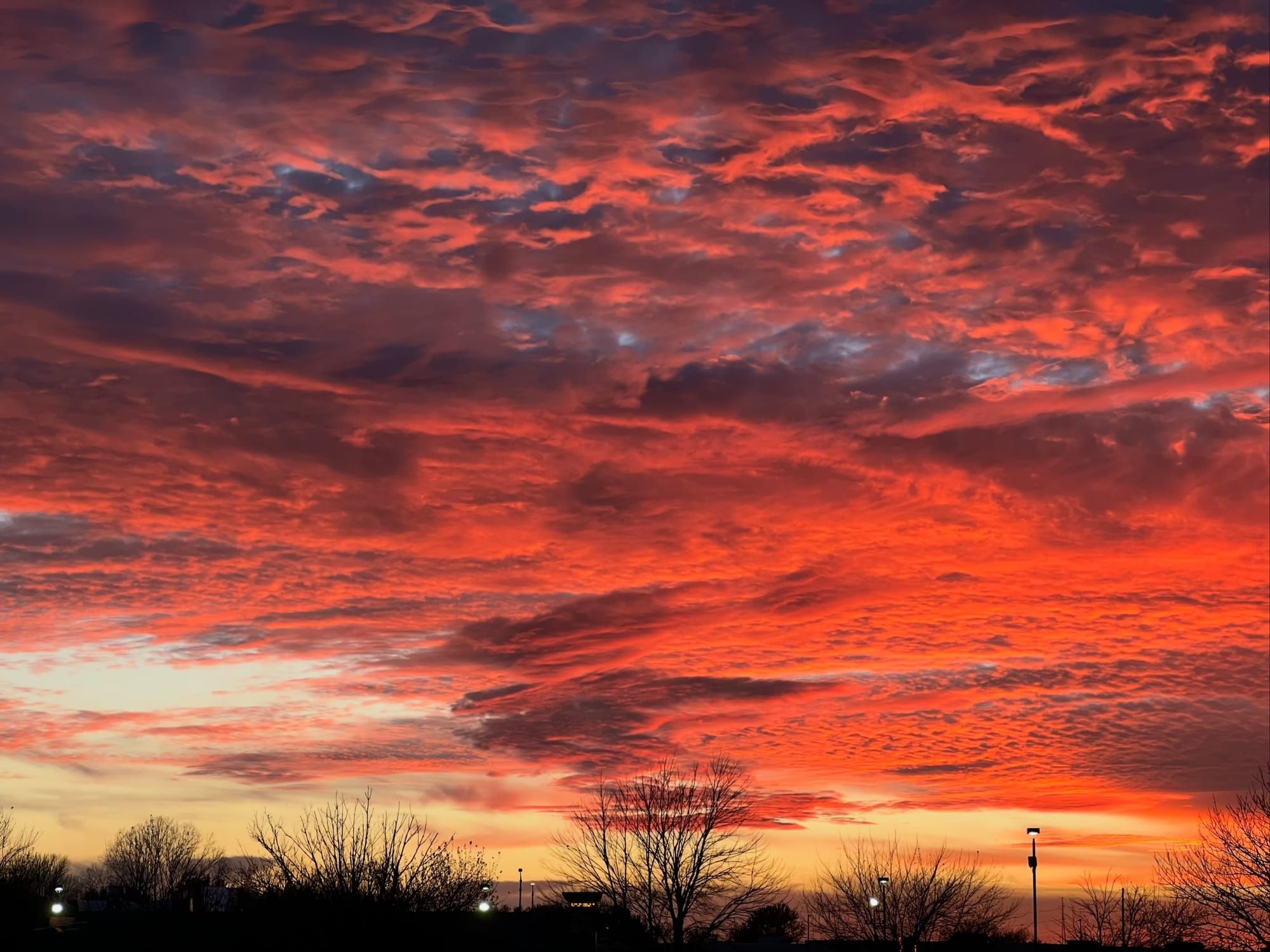
The sky behind the smoke burned orange and pink, so beautiful it almost made the whole thing feel unreal.
For a moment, the sunset and the fire looked like they belonged to each other.
And for the next twenty years, I quietly carried the belief that I had burned a house down.
Not because I started the fire.
But because I saw the lighter.
Because I didn’t stop him.
Because I walked instead of ran.
I never told Vickie what happened.
Not really.
She died a few years ago.
Before my mom died, though, I finally confessed the story to her. Fully. The lighter. The smoke. The fact that I’d secretly felt like an arsonist for two decades.
My mother laughed so hard she cried.
Eventually, I did too.
Somewhere between our laughter and the memory of Vickie’s fire-engine red nails and those melted ice cream cakes, it all finally felt lighter.
No pun intended.
Or maybe a little.