Eight Months in the Sewers of Oz
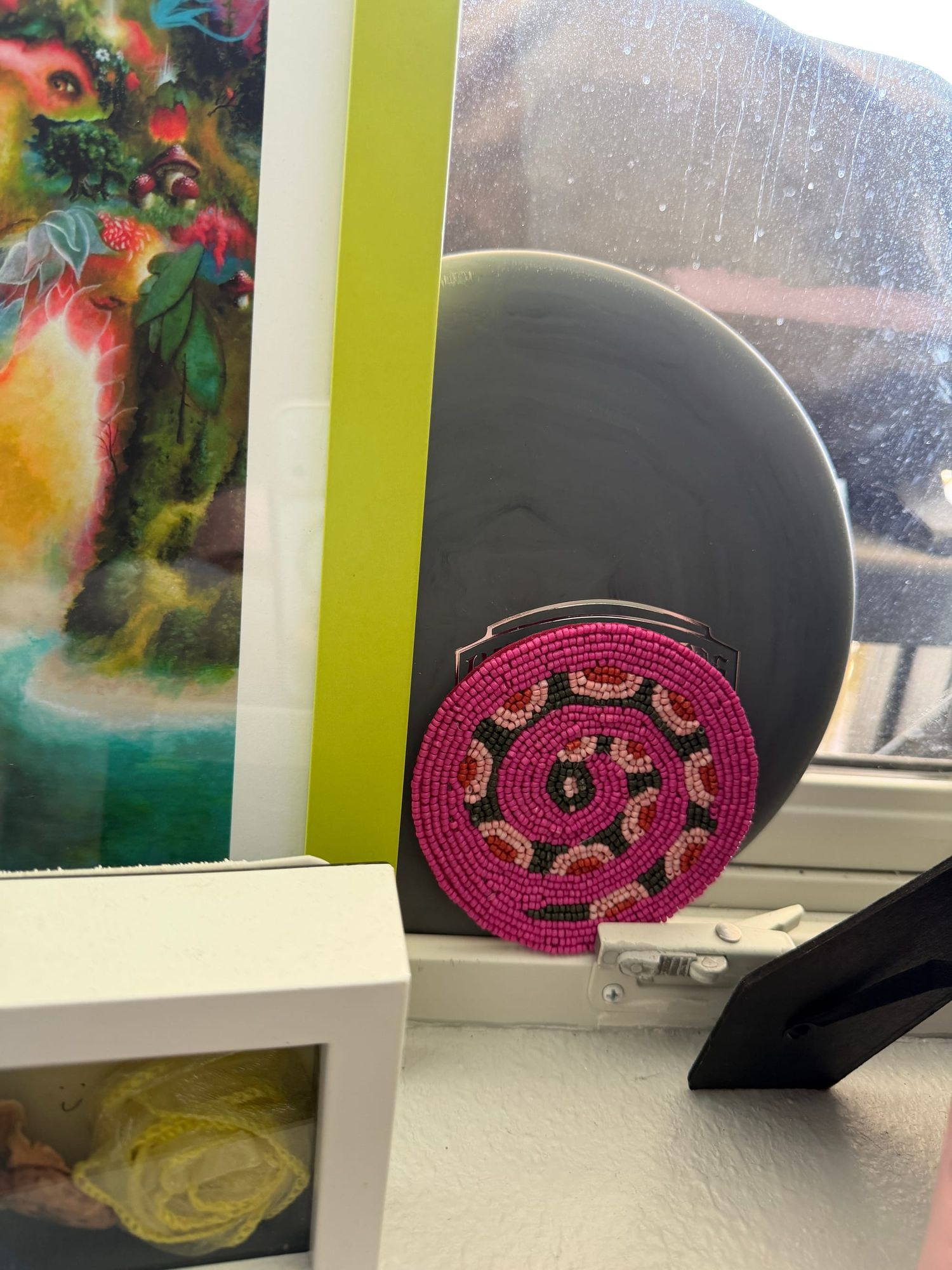
Even sewers can be paved in gold.
This morning, Loomis posted in Discord that he'd won second place in a tournament.
My first instinct was immediate. Celebration. Planning. The kind of infectious enthusiasm that used to send me charging through a warehouse looking for people to hype up in person.
Then I remembered.
I'm not there anymore.
I looked to my left. The disc golf disc he gave me sits on my desk. It's been there since I left. I don't know why I haven't moved it.
I crashed for a minute. The way you crash when joy and grief arrive at exactly the same moment and you can't tell them apart anymore.
And then I started writing.
For eight months, I was the HR Manager for a sewage company.
The offices were connected to the warehouse physically, but emotionally, the divide between them felt miles wide. Office staff whispered about warehouse workers like they were a different species entirely. The warehouse distrusted the offices right back. Years of passivity, gossip, burnout, miscommunication, and emotional neglect had rotted the culture from the inside out.
And then I walked into it.
At the time, I thought I was walking into another job.
I didn't realize I was stepping into Oz.
Not the polished Oz from storybooks. Not sparkling emeralds and cheerful songs. My Oz was fluorescent-lit and smelled faintly of cardboard, metal shelving, sweat, and industrial cleaner. It was populated almost entirely by emotionally haunted goblins communicating through memes, sarcasm, pop culture references, and elaborate inside jokes.
And somehow, against all odds, it became home.
I didn't know it then, but those eight months would fundamentally alter the way I understood myself.
Because Oz was never really about the destination.
It was about the companions gathered along the road.
I speak too loudly.
I ask difficult questions.
I notice systems.
I notice people.
I call for change instead of accepting emotional decay as normal.
And over and over again, it cost me jobs.
But this last place hurt differently.
Because for the first time, my intensity wasn't just tolerated.
People changed.
Not all at once. Not dramatically. More like a room slowly letting oxygen back in.
I needed that place more than it needed me. I didn't know that going in.
Of course there are villains in this story. Difficult people. Passive leaders. Gossip. Ego. Fear. The kinds of dynamics that slowly calcify inside workplaces until everyone forgets things could function differently.
But they do not get names here.
Because this story isn't about them.
People carry their own wounds into environments already struggling under pressure. Sometimes those things collide in ugly ways. Sometimes systems reward the worst instincts in otherwise ordinary people.
That doesn't excuse harm.
But it doesn't make harm the center of the narrative either.
The center of the narrative is what survived in spite of it.
The friendships.
The reconciliation.
The moments of honesty.
We didn't need special glasses to see the problems.
We already knew They Live.
What mattered was the people who stayed human anyway.
Snake Plissken worked in Receiving.
Most people described him the same way: difficult, moody, not a team player.
What I saw was someone who had spent years misunderstood.
People saw irritation.
I saw exhaustion.
So I bothered him.
Constantly.
Every day I stopped by Receiving to poke at him a little. Encourage him. Make stupid faces. Push him to take ownership of his department instead of shrinking inside it.
He resisted for a while.
Then one day, in the middle of me making some ridiculous expression at him, he mocked the face back perfectly.
That was the moment.
Not when his performance improved.
Not when leadership noticed changes.
When he finally felt safe enough to be goofy back.
Play is trust.
Humor is trust.
Especially among emotionally guarded people.
Snake Plissken pretended not to care about anything while secretly caring too much.
He was perpetually one inconvenience away from disappearing into the wilderness forever.
And somehow, underneath the sarcasm and burnout and emotional armor, he became one of my people.
Then there was Stevie Wayne.
Stevie Wayne carried a little Daria energy around with her.
Dry humor.
Guarded posture.
A tendency to look vaguely disappointed by existence itself.
She'd spent years alone in inventory, counting shelves in a massive warehouse while her spirit slowly starved to death.
Nobody thought to ask if she was okay there.
Human beings are ecosystems.
Some wilt under the wrong conditions.
Some bloom the second they feel safe enough to uncurl.
When an opening came up in Returns, she walked into her manager's office and admitted something terrifyingly honest:
She hated her job.
She wanted something different.
Stevie Wayne transferred to Returns and seemed to change overnight.
Not changed.
Revealed.
Receiving slowly became a gathering place for the misfits.
Not officially.
Not in any organizational-chart sense.
Emotionally.
Nick Halloway fit there immediately.
Nick Halloway gave the best hugs in the warehouse.
The kind of hugs that made you feel briefly reassembled afterward.
Leadership mostly saw his tardiness.
What they missed was a man who had given over five years to the company and moved through Shipping at the speed of two and a half people — until life changed around him and his schedule no longer matched the structure of the job.
The day his supervisor was preparing to terminate him for tardiness was the same day he moved into Receiving.
Monday through Friday.
Eight to five.
He was never late again.
Funny how people stop struggling quite so much once someone finally sees them clearly.
Receiving eventually stopped feeling like a department.
It became symbolic territory.
Not the place where the "best employees" went.
The place where the understood employees went.
The people who didn't fit neatly elsewhere.
Who needed community.
Who needed room to become themselves again.
The symbolism of the name still destroys me a little.
Receiving.
Receiving shipments.
Receiving people.
Receiving second chances.
Receiving understanding.
MacReady was different.
MacReady and I recognized each other before we ever exchanged words.
Some people announce themselves socially.
Others recognize each other almost silently first.
Pattern recognition before conversation.
Two emotionally overclocked people clocking familiar damage in each other across fluorescent lighting and warehouse noise.
MacReady was loud, dramatic, emotionally enormous, fiercely loyal, and felt everything at full volume.
Humor was armor.
Absurdity was emotional ventilation.
They didn't really need me the way some of the others did.
I needed them.
Not because they fixed me.
Because they proved I wasn't alone.
The Discord server started as a place for the goblins to exist outside warehouse hours.
Somewhere to send memes at midnight.
To debrief absurd meetings.
To build lore.
We built anti-anti-curse charms together while pretending not to care deeply about each other.
That's how emotionally damaged nerds survive.
We create lore instead of saying the scary things directly.
My Tinperson.
Never missing a heart.
Just trying not to drown in one.
Starman was emotionally huge.
Philosophical.
Warm.
But emotionally guarded in ways that took time to show.
If somebody was hurting, he immediately started engineering solutions.
If morale dropped, he tried to breathe life back into the room.
My Scarecrow.
Already impossibly wise.
Just occasionally convinced he wasn't.
He still carried a lot of inherited rot when we first met. Workplace rot. The kind that teaches people to keep their heads down, avoid conflict, accept emotional stagnation, and quietly survive.
Over time, something shifted.
He stood up for himself.
He stood up for other people.
He helped make work feel like something worth showing up to.
And once, in the middle of one of their strange philosophical tangents, he told me I had the grace of a planetary collision.
Beautiful.
Violent.
Transformative.
Impossible to ignore.
Loomis created a disc golf league for beginners and outsiders because he understood how humiliating elitist hobbies can become.
His league had room for awkwardness.
Room for learning.
Room for people who wanted to enjoy something without being made to feel stupid first.
My Lion.
Never short on courage.
Just sometimes unaware he was the one supplying it to everyone else.
One day he asked if the sewer company would sponsor the league.
"I'll find a way," I told him.
And I meant it.
Ethan Bishop handled the logistics.
Donations.
Coordination.
The practical backbone work that turns ideas into reality.
He didn't hesitate.
He just said yes.
Absolutely.
Some people become the infrastructure of culture without ever demanding credit for it.
That was Ethan Bishop.
Katherine Danforth mattered too.
Emotionally guarded in the way people become after years inside bad culture.
Strong sense of right and wrong.
Unwavering work ethic.
A softhearted person hidden under layers of self-protection.
Weeks before I was fired, she found me on the warehouse floor.
She'd started noticing changes around her.
People becoming happier.
Kinder.
More open.
She wanted to be part of that.
She wanted to do better.
She wanted to reconnect with someone she'd drifted from.
They were in a conference room within ten minutes.
And they talked.
Really talked.
Not like coworkers.
Like people.
People were becoming brave enough to admit when they'd been wrong.
That's rare.
Especially inside workplaces.
Oz taught me something terrifying:
Intensity is not inherently destructive.
For years, being emotionally large, observant, attached, enthusiastic, wounded, expressive — being "too much" — felt like something that would inevitably damage the environments around me.
But then Oz happened.
And people got braver.
Kinder.
More honest.
More connected.
More themselves.
The real talent was never administration.
It was cultivation.
It can't be unknowed.
It can't be unfelt.
But Oz was never perfect.
In the weeks leading up to the end, there was a distance that couldn't be closed.
The company and I were speaking different languages.
Every conversation about people — about morale shifts, reconciliations, someone finally advocating for themselves after years of silence — kept returning to functionality.
Output.
Efficiency.
Structure.
One version of the company was about ecosystems.
The other was about operations.
Neither perspective was inherently evil.
But the distance between them was exhausting.
The reason to stay wasn't the company anymore.
It was the people.
The fear of them falling backward.
Being minimized again.
Slowly returning to emotional survival mode after finally beginning to unfold.
Maybe that instinct was arrogant.
Maybe it was love.
Probably both.
The ending came anyway.
It always does.
So before the tornado hit, a Discord server went up as somewhere else to land.
And after the termination, something beautiful happened.
They stayed.
Not because they had to.
Because they wanted to.
They still come for advice.
To vent.
To celebrate things.
To share memes.
To keep orbiting each other.
That might be the least professional thing.
And the most human.
The physical orbit is what's missed most.
Random walks through the warehouse.
Receiving.
Overhearing absurd conversations.
The fluorescent lights reflecting off metal shelving while people debated cursed nonsense in real time.
Discord preserved the town.
But grief still exists because bodies matter.
Presence matters.
Shared air matters.
And yet the connection survived anyway.
Maybe that's the real magic.
Dorothy once said:
"If I ever go looking for my heart's desire again, I won't look any further than my own backyard."
My version:
If I ever go looking for my heart's desire again, I won't look any further than a Discord server.
Maybe that sounds ridiculous.
But so did Oz.
Because somewhere between Receiving, Discord goblins, disc golf leagues, anti-curse charms, fluorescent lighting, emotional reconciliations, pop culture references, and endless strange little moments of tenderness — a very un-HR thing happened.
Real friends were made.
Not networking connections.
Not "work family."
Not professionally appropriate emotional proximity carefully approved by corporate culture.
People were loved.
And worse than that, they loved back.
That changes a person.
There's no returning from it now.
Which brings me to this morning.
Sitting here with the disc to my left, trying to write about people who matter, I made the mistake of asking the Discord goblins for fake names.
I told them I didn't want to use their real names in the essay.
That was my first mistake.
Goblins do not provide usable answers to questions like this.
Goblins provide chaos.
Within minutes: Peter F Chang. Pretty Petty Princess Peaches. Whatever cursed linguistic evolution was happening to the name Chet that week. Someone asked if their character could roar and breathe fire like Smaug instead of whatever I had planned.
At one point I threatened to just assign everybody the name of a president if they didn't cooperate.
This somehow encouraged them.
So I stopped asking permission from the goblins.
The story was always Oz.
A yellow brick road through a fluorescent-lit sewage company in the Midwest.
But the goblins ambushed me into Carpenter on the way there.
I had just decided to rewatch Halloween.
John Carpenter has always been one of my favorite directors.
Something about the way he writes people always felt familiar.
His characters are rarely polished heroes.
They're exhausted.
Funny.
Human.
Protective.
Lonely.
Loyal.
Damaged.
Most of them feel like people surviving systems and circumstances slightly larger than themselves.
Like warehouse workers.
Like recruiters.
Like all of us.
The second I mentioned Carpenter, MacReady said their own name.
Not as a suggestion.
As an inevitability.
And suddenly the answer was obvious.
Not inventing names for them.
Recognizing them.
Snake Plissken was already sitting in Receiving pretending not to care while secretly caring very deeply.
MacReady was already protecting people emotionally through humor and chaos.
Stevie Wayne had already spent years isolated in a metaphorical lighthouse.
Loomis was already trying to build safer spaces for outsiders.
The roles were already there.
The chaos stopped.
Not dramatically.
The way things settle when something finally fits.
Snake Plissken said it quietly, in the middle of everything.
That's kinda spot on though ngl.
That was the moment.
Starman was honored to be Starman.
And within the hour was producing Starman quotes on demand.
I put so much thought into this shit.
And they showed up for it completely.
That's the thing people misunderstand about groups like ours.
The absurdity isn't hiding the affection.
The absurdity is the affection.
The disc sits to my left.
Right where it's been all morning.
Not a trophy.
Proof.
Proof that this strange little civilization existed at all.
Proof that tenderness survived the rot.
Proof that for eight months in a fluorescent-lit sewer company, a bunch of emotionally haunted goblins found each other and accidentally built a town.